 How-to
Commercial HVAC Repair Services: What to Expect
Table of Contents
- Commercial HVAC Repair Services: What Happens When You Call
- Commercial HVAC Troubleshooting: The Step-by-Step Repair Workflow
- Commercial HVAC Repair Cost: What Drives the Final Bill
- The Commercial HVAC Inspection Checklist Every Property Manager Should Use
- Commercial HVAC Maintenance: Preventing Breakdowns Before They Happen
- Repair or Replace? A Decision Framework for Aging Systems
- How to Choose a Commercial HVAC Repair Provider
- Frequently Asked Questions
Last Updated: October 16, 2026
Commercial HVAC Repair Services: What Happens When You Call
A commercial HVAC repair services call starts with a phone conversation, not a toolbox.
At Nick's Oasis LLC, we handle commercial HVAC repair services for property managers and business owners who cannot afford a system that quits mid-week.
Here is the part most people miss. The quality of the repair depends less on the technician's speed and more on the diagnosis that happens before any wrench turns.
Commercial HVAC Troubleshooting: The Step-by-Step Repair Workflow
Troubleshooting follows a fixed sequence, and skipping steps is how small faults become expensive ones. A good technician works from the outside in, confirming each stage before moving to the next.
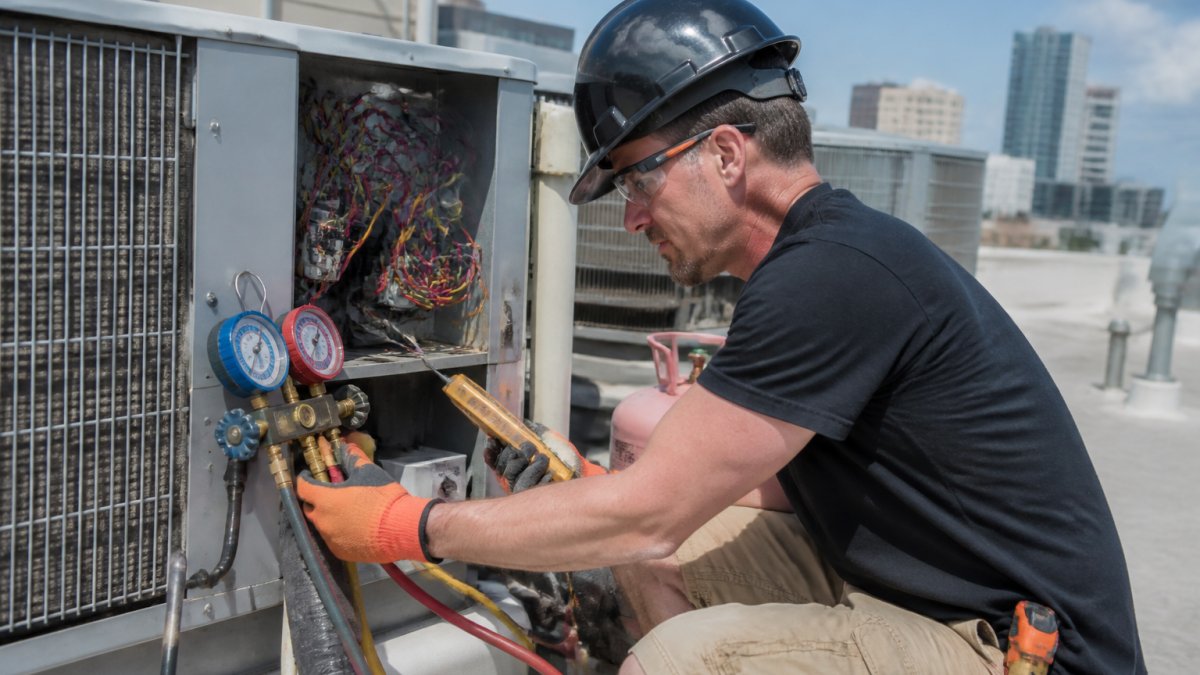
From Symptom to Diagnosis
The workflow usually runs like this:
- Confirm the complaint with the building occupant or manager
- Check thermostat and control settings against actual demand
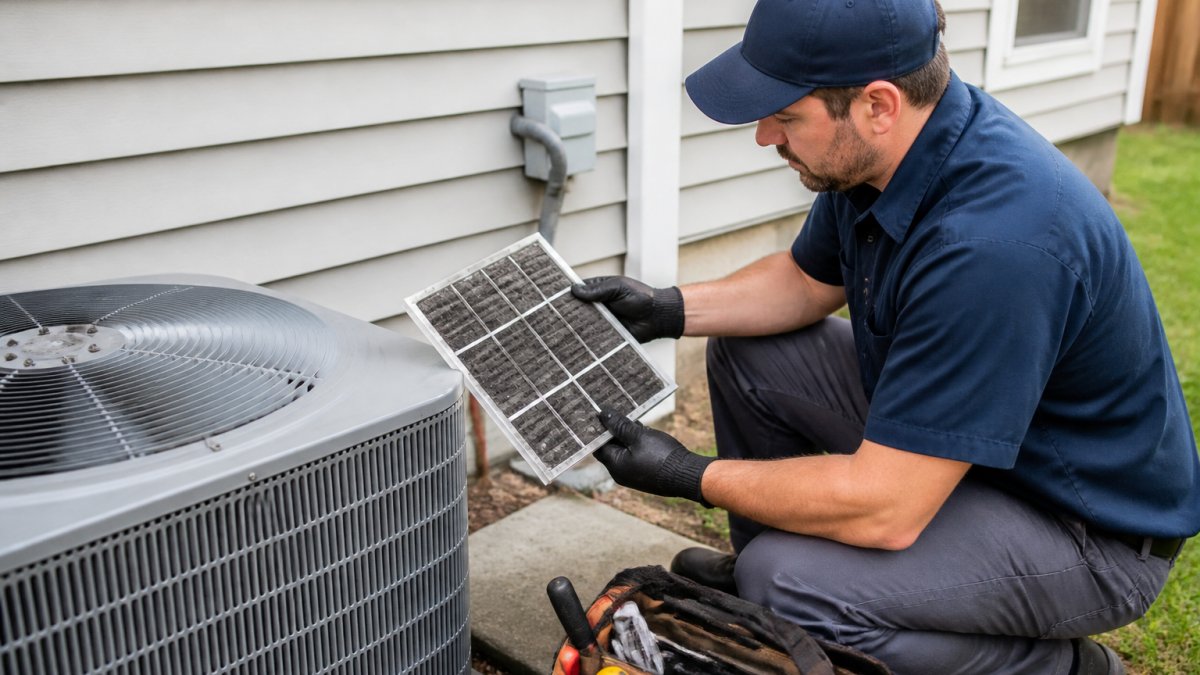
- Inspect the unit for obvious faults: filters, belts, ice, or tripped breakers
- Test electrical components with a multimeter
- Measure refrigerant pressures and check for refrigerant leaks
- Inspect airflow through ducts and VAV systems
- Compare readings to the manufacturer's specifications
- Recommend a repair or explain why a replacement makes sense
When to Stop and Call a Technician
Some jobs are safe to handle in-house. Changing filters, resetting breakers, and clearing obstructions around a rooftop unit are all reasonable. Anything involving refrigerant, gas lines, or electrical panels is not.
Commercial HVAC Repair Cost: What Drives the Final Bill
Repair costs vary widely because the variables vary widely. Two buildings with the same broken rooftop unit can produce very different invoices. What most service pages skip is the actual structure of the bill, so here is how to read one before you sign it.
The Three Lines on Every Commercial HVAC Invoice
Almost every commercial repair bill breaks into three parts:
- Diagnostic or trip charge. A flat fee to send a technician out and identify the fault. In most markets this runs roughly $75 to $200 for a standard business-hours visit, and many providers credit it toward the repair if you approve the work.
- Labor. Billed hourly or as a flat task rate. Standard commercial rates commonly fall in the $100 to $200 per hour range, with after-hours, weekend, and holiday calls typically billed at 1.5x to 2x the standard rate.
- Parts and refrigerant. Billed at cost plus a markup. Refrigerant is priced per pound and varies with the type, R-410A and the newer low-GWP blends cost more per pound than legacy refrigerants, and the price moves with supply.
Those ranges are benchmarks, not quotes. Your actual bill depends on the factors below.
What Actually Moves the Number
- Part type and availability. A run capacitor or contactor is an inexpensive, same-day part. A compressor, an economizer control board, or a variable-frequency drive is a major expense and may be backordered. Ask whether the part is stocked locally or shipped.
- Refrigerant type and charge. If a system is low, the technician must find and fix the leak before recharging, federal law under Section 608 of the Clean Air Act requires certified technicians to repair leaks above certain thresholds rather than simply top off the charge (the EPA). That leak search adds labor hours.
- Access difficulty. A rooftop unit with no permanent ladder, a curb adapter that blocks panel access, or a unit crammed against a wall all add time. Roof access may also require a fall-protection setup under OSHA rules, which adds setup labor.
- System type. A packaged rooftop unit, a split system, a boiler, a chiller, and a VAV terminal each carry different labor profiles. Chillers and large boilers often require two technicians, which doubles the labor line.
- Time of day and season. Emergency and 24-hour calls cost more. So does peak season, when demand outstrips technician supply.
How to Compare Two Estimates
Two quotes for the same repair are rarely apples to apples. Before you choose, confirm:
- Does the price include the diagnostic fee, or is that separate?
- Is the part OEM or aftermarket, and what warranty comes with it?
- Is labor billed hourly or flat, and does the estimate include a not-to-exceed cap?
- Does the quote include refrigerant, or is that billed separately at prevailing market price?
- What is the warranty on the repair itself, 30 days, 90 days, one year?
The honest answer to "what will this cost?" is that no reputable provider can quote a repair before diagnosing it. What they can do is explain their diagnostic fee, give you a written estimate with a not-to-exceed figure, and lay out the repair-versus-replace math in writing. Ask for all three.
The Commercial HVAC Inspection Checklist Every Property Manager Should Use
An inspection checklist turns guesswork into a routine. Run this monthly on each unit, and note anything that changes.
- Replace or clean air filters
- Check thermostat calibration and scheduling
- Inspect belts for cracking or slack
- Listen for unusual noise at startup
- Check for ice buildup on coils
- Clear debris from around outdoor and rooftop units
The point of the checklist is not to fix everything yourself. It is to catch the small changes that signal a bigger problem. A filter that clogs faster than usual often means a fan or motor is struggling. A drain that backs up points to a blockage that will eventually cause water damage.
Commercial HVAC Maintenance: Preventing Breakdowns Before They Happen
Preventive maintenance is the cheapest repair you will ever buy. A scheduled visit catches worn belts, low refrigerant, and dirty coils before they cause equipment downtime.
Many property managers ask whether preventive maintenance actually lowers electric bills. The honest answer is that it depends on the system. A well-maintained unit runs closer to its rated efficiency, but the bigger payoff is avoiding the nuisance downtime that costs you tenants, customers, or production hours.
Repair or Replace? A Decision Framework for Aging Systems
Use this framework when a system is old and the repair bill is climbing.
| Question | Repair | Replace |
|---|---|---|
| Age of system | Under 15 years | Over 15 years |
| Repair cost vs. new unit | Well below replacement | Approaching replacement |
| Repair frequency | First issue in years | Third or fourth this year |
| Refrigerant type | Current standard | Phased-out type |
| Efficiency | Meets your needs | Driving up energy costs |
| Parts availability | Readily available | Hard to source |
The rule of thumb most technicians use: if the repair costs more than a third of a new system and the unit is past its expected life, replacement usually wins.
A trustworthy provider will give you both numbers and let you decide. If a technician pushes replacement without explaining the math, get a second opinion.
How to Choose a Commercial HVAC Repair Provider
Choosing a provider comes down to more than a friendly phone voice. For a commercial building, you are hiring a contractor who will work on equipment that keeps your business running, and who carries legal and safety obligations on your property. Vet them on credentials first, then on responsiveness.
Credentials to Verify Before You Book
- State or local license. HVAC contracting is licensed at the state or local level, and requirements vary. Ask for the license number and verify it with the issuing authority. A provider who cannot produce a number is a hard stop.
- Insurance. Ask for a certificate of insurance showing general liability and workers' compensation coverage. If an uninsured technician is injured on your roof, the exposure can land on you.
- EPA Section 608 certification. Any technician who handles refrigerant must hold EPA certification under Section 608 of the Clean Air Act. This is a federal requirement, not a nice-to-have. Ask whether the technicians who will service your equipment are certified.
- Manufacturer authorization. For warranty work on packaged rooftop units, split systems, or specific brands, an authorized provider can file warranty claims directly. A non-authorized shop may void coverage or make you chase the claim yourself.
- Trade affiliations. Membership in industry organizations such as ACCA or NATE certification for individual technicians signals ongoing training, though it is not a substitute for licensing.
Response Time and Coverage Questions
- What is your guaranteed response time for an emergency call, and is it in writing?
- Do you stock common parts for the equipment models in my building, or will every repair wait on a shipment?
- Do you offer 24-hour service, and is there a separate after-hours rate?
- How many commercial accounts do you currently service, and can you provide references in my building type?
Documentation You Should Expect
A professional commercial provider documents the work. Ask for:
- A written diagnosis with the readings that support it, not just a verbal summary.
- A written estimate with a not-to-exceed figure before work begins.
- A service record listing parts installed, refrigerant added or recovered, and the technician's name and certification.
- Refrigerant handling records, which federal rules require for equipment above certain charge sizes.
- A warranty statement covering both the part and the labor.
That paper trail matters for warranty claims, for your own maintenance history, and for any future repair-versus-replace decision.
Red Flags
- A quote given before anyone has seen the unit.
- A push toward full replacement without written repair-versus-replace math.
- No license number, no insurance certificate, or evasiveness when you ask.
- No written estimate or no warranty on the repair.
- A technician who cannot explain, in plain language, what is wrong and why the fix addresses it.
A provider who answers all of the above without hesitation is worth keeping. One who dodges the credential or pricing questions is not.
At Nick's Oasis LLC, we work with both residential and commercial customers, covering central air, ductless mini-split systems, heat pumps, and furnaces. Our team keeps you informed at every stage, from the first call to the final walkthrough, so you always know what is being done and why.
Frequently Asked Questions
How much does commercial HVAC repair typically cost?
Commercial HVAC repair cost depends on the equipment type, the failed component, and how quickly the repair needs to happen. Common cost drivers include refrigerant leaks, compressor failures, blower motor replacement, and after-hours emergency calls. Because every building and system is different, the most reliable way to get an accurate number is to request an on-site diagnosis and a written estimate before any work begins. Nick's Oasis LLC provides upfront pricing so you know the cost before approving the repair.
How often should commercial HVAC equipment be inspected?
Most commercial HVAC systems should be inspected at least twice a year, ideally in spring before cooling season and in fall before heating season. A commercial HVAC inspection checklist should cover filters, belts, refrigerant levels, coils, electrical connections, and controls. Properties with heavy usage, such as restaurants or data rooms, may need quarterly inspections. Regular commercial HVAC maintenance catches small issues before they become emergency repairs and helps extend equipment lifespan.
Can regular maintenance prevent commercial HVAC breakdowns?
Regular commercial HVAC maintenance reduces the likelihood of unexpected breakdowns by keeping filters clean, refrigerant levels correct, and moving parts lubricated. It also helps technicians spot worn components before they fail during peak demand. While no maintenance schedule eliminates every risk, a documented plan with scheduled inspections gives property managers a clear record of system condition and makes it easier to plan for repairs or replacements on a predictable timeline rather than reacting to emergencies.
What should I look for in a commercial HVAC repair company?
Look for a provider that services the equipment types you have, offers emergency and 24-hour service, and provides upfront pricing before work starts. Ask whether they handle both repair and installation, since a company that only repairs may push replacement sooner. Check reviews for responsiveness and honesty. Nick's Oasis LLC maintains communication throughout the process so you know what to expect at every step.