 How-to
HVAC Maintenance Checklist for Homeowners
Table of Contents
- Why an HVAC Maintenance Checklist Saves You Money
- Seasonal HVAC Maintenance: What to Do in Spring and Fall
- How to Build an HVAC Maintenance Schedule That Works
- Air Conditioner Maintenance Checklist for Cooling Season
- Furnace Maintenance Checklist for Heating Season
- DIY vs. Professional HVAC Maintenance: Where to Draw the Line
- Common Mistakes Homeowners Make With HVAC Maintenance
- Frequently Asked Questions
Last Updated: October 14, 2026
Why an HVAC Maintenance Checklist Saves You Money
An HVAC maintenance checklist is a simple, repeatable list of tasks that keeps your heating and cooling system running safely and efficiently all year.
The math is straightforward. A system that's choked with dust and debris works harder to move the same air, and that extra effort shows up on your utility bill. The U.S.
Below, we break down a full HVAC maintenance checklist for homeowners, season by season, with clear lines on what you can handle and what needs a pro.
Seasonal HVAC Maintenance: What to Do in Spring and Fall
Seasonal HVAC maintenance splits into two main events: a spring tune-up before cooling season and a fall check before heating season. Each one takes an afternoon and prevents the worst breakdowns. The key is knowing which tasks you can safely do yourself and which ones belong to a licensed technician.
Spring Checklist (Before Cooling Season)
Safe for most homeowners:
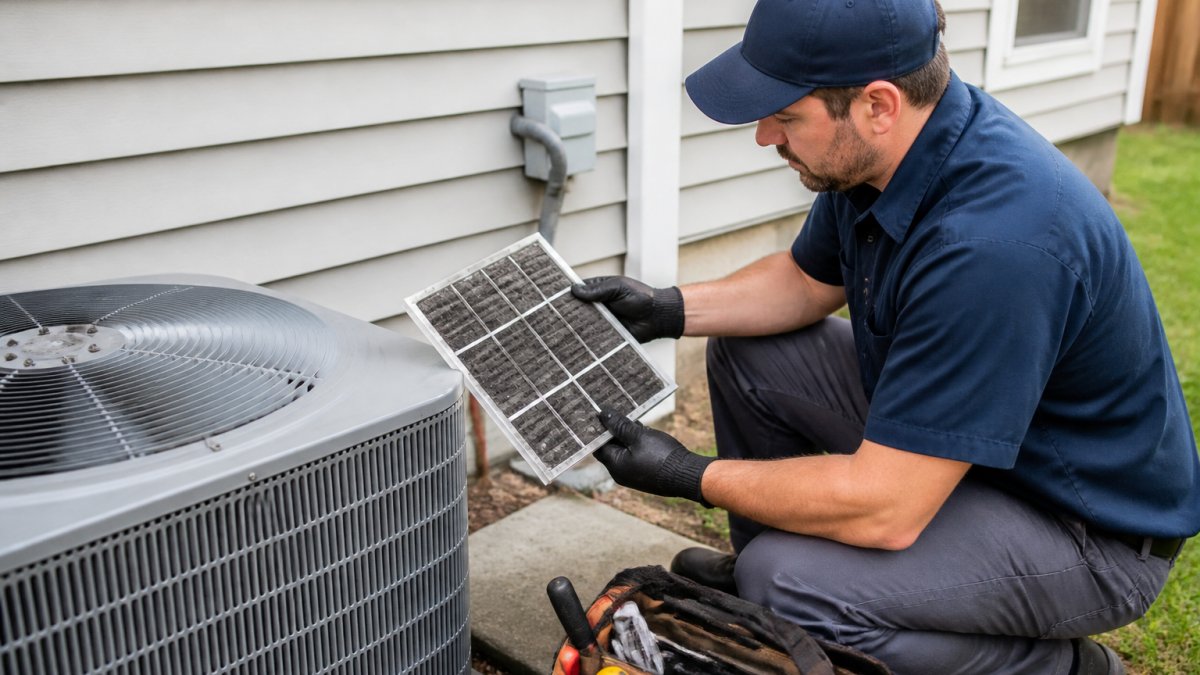
- Replace the air filter
- Clear debris from the outdoor unit and keep two feet of clearance
- Check the thermostat and swap the batteries
- Test the air conditioner with a short run
- Rinse the outdoor condenser coils with a garden hose
- Check the condensate drain for clogs
- Vacuum vents and registers
Call a licensed technician for:
- Refrigerant level checks or recharges
- Any work on the sealed system
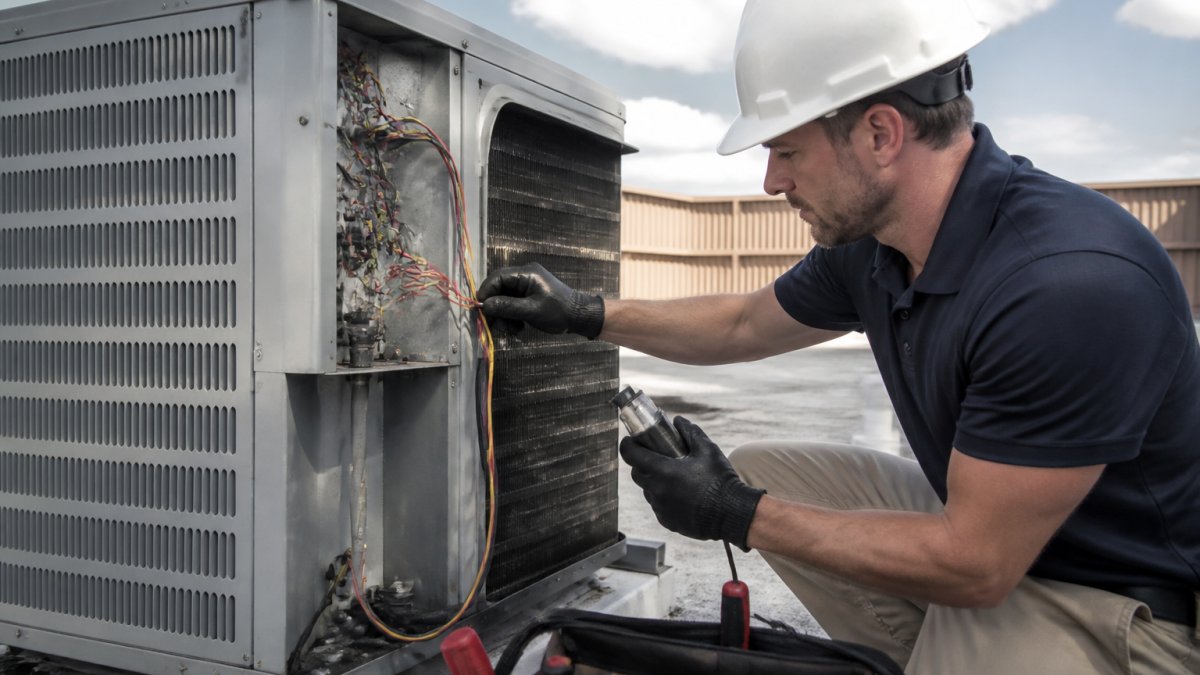
- Electrical connection repairs
- Motor, compressor, or coil replacement
Fall Checklist (Before Heating Season)
Safe for most homeowners:
- Replace the air filter
- Test the heating system before the first cold snap
- Seal gaps around windows and doors
- Vacuum vents and registers
- Test smoke and carbon monoxide detectors
- Inspect the flame color on a gas furnace (a healthy flame is blue)
- Keep snow and ice clear of a heat pump's outdoor unit
Call a licensed technician for:
- Gas line or burner work
- Flue and vent inspection
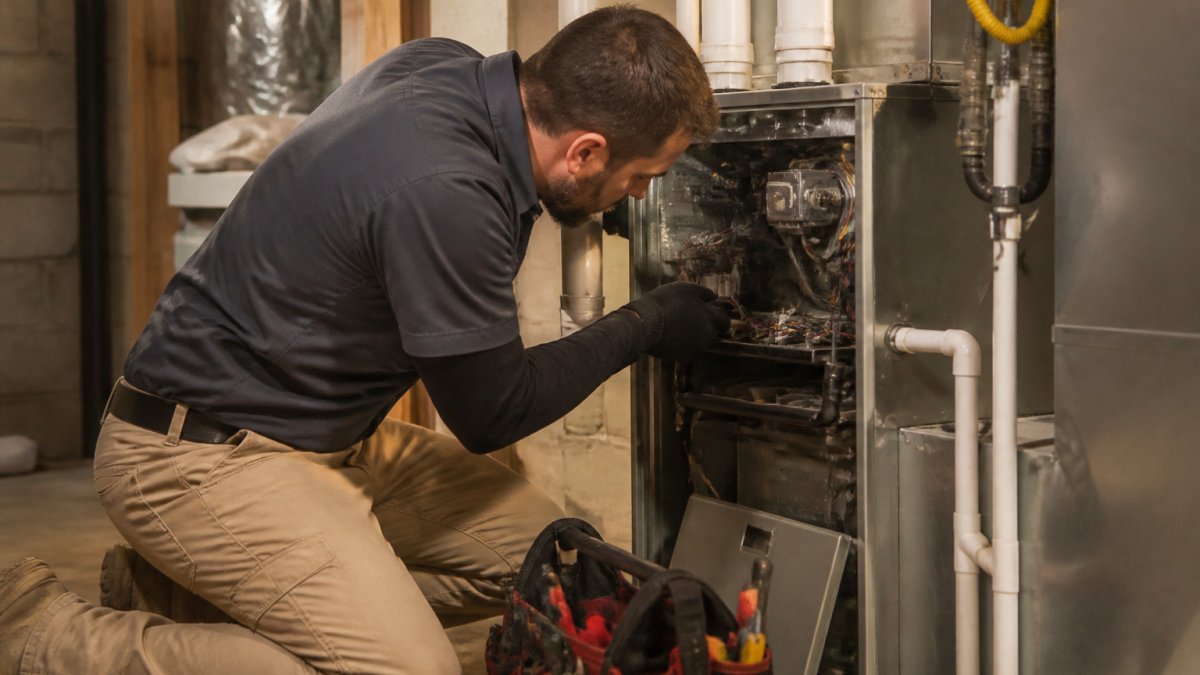
- Heat exchanger inspection
- Electrical connection repairs
- Any work on a sealed system
That last point matters more than most people think. The U.S. Consumer Product Safety Commission recommends testing these detectors monthly and replacing backup batteries at least once a year, because a furnace that develops a leak or a blocked flue is a real safety risk, not just a comfort problem.
Warning Signs That Mean Stop and Call a Pro
A checklist is not just a to-do list; it is a way to catch problems early. Some signs are routine. Others mean shut the system down.
Call a professional if you notice:
- A yellow or flickering furnace flame, which can indicate incomplete combustion and carbon monoxide production
- A grinding, squealing, or banging noise on startup
- Weak airflow from supply vents after a fresh filter
- A unit that ices over in cooling mode
- Short cycling, where the system turns on and off every few minutes
- A persistent musty or burning odor
- Water pooling near the indoor unit or air handler
- A utility bill that climbs while settings stay the same
A common pattern is that homeowners wait on a small noise until it becomes a no-cool or no-heat call in the middle of a temperature swing, when service wait times are longest. The earlier you flag it, the cheaper the fix tends to be.
Indoor Air Quality and Humidity
Seasonal maintenance is also the right time to think about moisture and air quality, not just temperature. A condensate drain that clogs can cause water damage and mold. High indoor humidity in summer makes the system work harder and feels less comfortable at the same thermostat setting. In winter, dry air is a common complaint. A simple hygrometer, available at most hardware stores, tells you where you stand.
How to Build an HVAC Maintenance Schedule That Works
An HVAC maintenance schedule is a calendar of recurring tasks tied to the seasons, and the best one is short enough that you'll actually follow it. Most homeowners only need a handful of reminders.
| Task | Frequency | Who Does It |
|---|---|---|
| Check and replace air filter | Every 30 to 90 days | Homeowner |
| Clear debris around outdoor unit | Monthly | Homeowner |
| Inspect vents and airflow | Monthly | Homeowner |
| Test thermostat and controls | Monthly | Homeowner |
| Check for leaks and odd noises | Seasonally | Homeowner |
| Professional tune-up | Once a year | Technician |
Set phone reminders for the first of each month. The pro tune-up is the one appointment worth locking in early, since heating and cooling companies book up fast when temperatures swing.
Month-by-Month Schedule by System Type
Use the row that matches your equipment. If you have more than one system, run both columns.
| Month | Central AC | Furnace | Heat Pump | Ductless Mini-Split |
|---|---|---|---|---|
| January | Off-season: cover or clear snow | Mid-season filter check | Clear snow/ice from outdoor unit | Clean indoor head filters |
| February | Off-season | Filter check | Defrost cycle check | Filter check |
| March | Pre-season: rinse condenser, test run | Late-season filter check | Transition check | Filter check |
| April | Replace filter, test cooling | Off-season | Switch to cooling mode test | Clean indoor heads |
| May | Rinse condenser coils | Off-season | Rinse outdoor unit | Rinse outdoor unit |
| June | Filter check, condensate drain | Off-season | Filter check | Filter check |
| July | Filter check, airflow check | Off-season | Airflow check | Airflow check |
| August | Filter check | Pre-season: schedule tune-up | Filter check | Filter check |
| September | Late-season filter check | Replace filter, test heat | Pre-season: schedule tune-up | Pre-season: schedule tune-up |
| October | Off-season | Rinse burner area, test heat | Test heating mode | Test heating mode |
| November | Off-season | Filter check | Clear leaves from outdoor unit | Clean indoor heads |
| December | Off-season | Filter check | Clear snow/ice | Filter check |
A few notes on the table. "Off-season" does not mean ignore the system; it means the heavy tasks shift to the other season. Heat pumps run year-round, so they need filter checks in both heating and cooling modes. Mini-splits have washable filters at each indoor head, and those clog faster than a central return filter in homes with pets or high dust.
Setting Up Reminders That Actually Work
A schedule only helps if it fires. Three habits make it stick:
- Put recurring phone reminders on the first of each month for filter and visual checks.
- Put a single annual reminder 30 days before your typical first cold snap for the furnace or heat pump tune-up.
- Tape a small card inside the air handler closet door with the filter size, the last change date, and the technician's number.
Tracking Performance, Not Just Tasks
A schedule tells you what to do. A log tells you whether it is working. Note the date, the task, the filter size, the thermostat setting, and anything you noticed, such as a new noise or a room that runs warm. Over a season, that log shows patterns a single service visit cannot: a filter that clogs in 30 days instead of 90, a system that short-cycles only on the hottest afternoons, or a utility bill that creeps up while settings stay the same.
Air Conditioner Maintenance Checklist for Cooling Season
An air conditioner maintenance checklist focuses on airflow, refrigerant, and the parts that take the most strain in summer. Work through it before the first hot week, not during it.
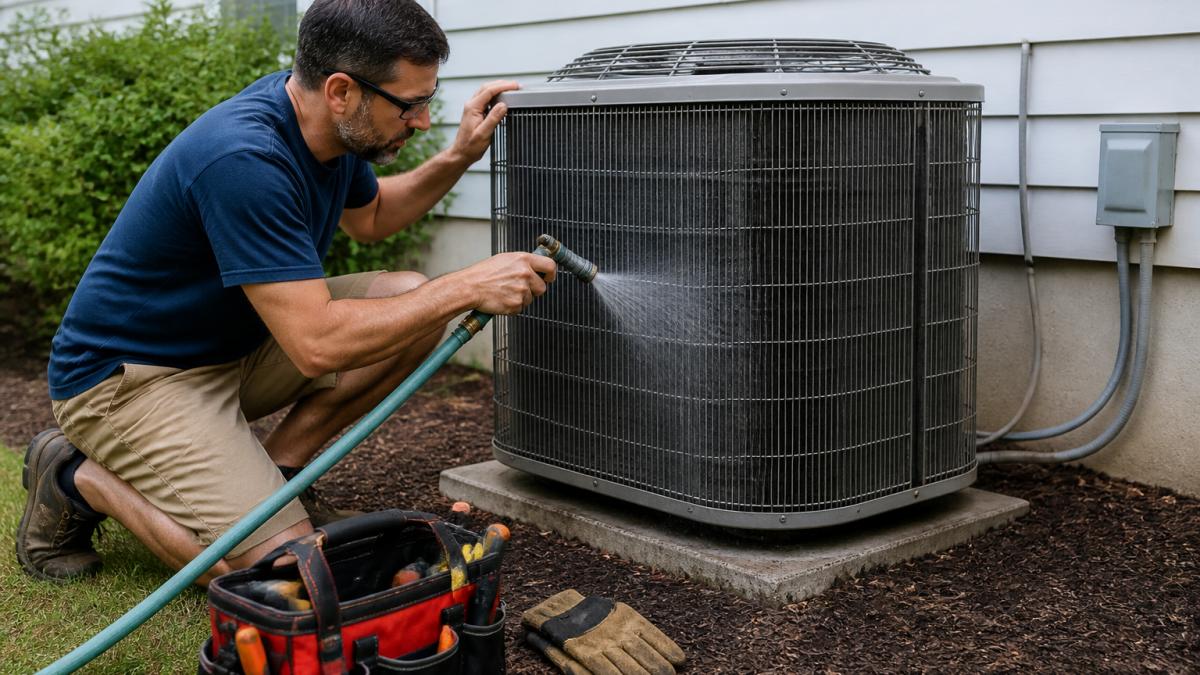
- Rinse the outdoor condenser coils with a garden hose
- Keep two feet of clearance around the outdoor unit
- Straighten bent fins with a fin comb
- Check the condensate drain for clogs
- Listen for grinding or squealing on startup
- Watch for weak airflow from supply vents
Weak airflow usually points to a clogged filter or blocked vents, and both are easy fixes. A grinding noise or a unit that ices over is a different story.
Furnace Maintenance Checklist for Heating Season
A furnace maintenance checklist centers on the filter, the burners, and the flue, because those are the parts tied to both efficiency and safety. Run through it in early fall.
- Replace or clean the filter
- Vacuum dust from the burner area
- Check the flue and vent for blockages
- Test the thermostat and timer settings
- Inspect the flame color (a healthy flame is blue)
- Tighten electrical connections you can safely reach
A yellow or flickering flame is a warning sign. It can mean incomplete combustion, which produces carbon monoxide. Shut the system off and call a professional.
DIY vs. Professional HVAC Maintenance: Where to Draw the Line
DIY maintenance covers the filter, the vents, the outdoor unit, and the thermostat. Professional maintenance covers anything involving refrigerant, gas, electrical panels, or sealed components. Knowing the line keeps you safe and your warranty intact.
Safe for most homeowners:
- Filter replacement
- Vent and register cleaning
- Debris removal around the outdoor unit
- Thermostat checks and battery swaps
- Visual inspections for leaks or damage
Call a licensed technician for:
- Refrigerant checks or recharges
- Gas line or burner work
- Electrical connection repairs
- Motor, compressor, or coil replacement
- Any work on a sealed system
Many manufacturers recommend annual professional service to keep the warranty valid. Skipping it may mean a failed part is not covered.
Common Mistakes Homeowners Make With HVAC Maintenance
The biggest mistakes are skipping the filter, ignoring small noises, and letting a technician upsell a replacement you don't need. Here's how to avoid all three.
- Running the filter until it's completely clogged
- Ignoring a new rattle or squeal for weeks
- Blocking return vents with furniture
- Turning the thermostat way up or down to "speed things up"
- Skipping the annual tune-up to save money
- Never keeping records of service dates
That last one costs you. A written log of filter changes and service visits helps a technician diagnose problems faster and proves you've maintained the system if you ever file a warranty claim.
An HVAC system that gets steady attention lasts longer, runs cheaper, and keeps your home comfortable when the weather turns. When a task lands outside your comfort zone, or when something just doesn't sound right, that's when to bring in help. Nick's Oasis LLC handles installation, repair, and maintenance for central air, ductless mini-splits, heat pumps, and furnaces, and we maintain constant communication throughout the process.
Frequently Asked Questions
What should homeowners include in an HVAC maintenance checklist?
A complete HVAC maintenance checklist for homeowners covers filter replacement every 30 to 90 days, clearing debris and maintaining two feet of clearance around the outdoor unit, inspecting supply and return vents for blockages, testing thermostat batteries and timer settings, checking for refrigerant leaks or unusual noises, and scheduling a professional tune-up once a year. Group tasks by season so nothing gets skipped when the weather shifts.
How often should you schedule HVAC maintenance?
Most manufacturers recommend professional service once a year for each system, meaning one visit for your air conditioner in spring and one for your furnace or heat pump in fall. Between those visits, homeowners should replace or clean air filters every 30 to 90 days depending on filter efficiency and household conditions. Homes with pets, heavy dust, or year-round system use may need more frequent filter changes.
What HVAC maintenance can homeowners do themselves?
Homeowners can safely handle filter replacement, clearing leaves and debris from around the outdoor unit, vacuuming supply and return vents, checking thermostat batteries, and visually inspecting electrical connections for obvious wear. Anything involving refrigerant, the evaporator coil, gas lines, or the furnace heat exchanger requires a licensed technician. If you smell gas, hear grinding, or see ice on the coils, shut the system off and call a professional.
When should you replace your HVAC air filter?
Replace standard pleated filters every 30 to 90 days. A filter that looks gray and clogged is restricting airflow, which forces your system to work harder and can raise energy bills. If you run the system daily, have pets, or live in a dusty area, lean toward the 30-day end. Check the filter monthly and mark the change date on your HVAC maintenance schedule so it does not slip.