 blog
Best Heat Pump Systems 2026: A Homeowner's Buying Guide
Last Updated: November 19, 2026
Quick Summary
The best heat pump systems in 2026 are rated for your climate, sized to your house, and installed by a contractor who runs a load calculation first. Compare SEER2 to SEER2 and HSPF2 to HSPF2, and ask for the unit's rated capacity at your design temperature.
- A verified load calculation, matched indoor and outdoor units, and a clear installer separate a good system from a regret.
- Air-source heat pumps suit homes with existing ducts, while ductless mini-splits serve individual rooms or zones.
- A variable-speed compressor using inverter technology modulates output in small steps and cuts energy consumption in mild weather.
- Ask each contractor to itemize equipment, labor, ancillary work, and add-ons so you compare the same scope.
- A thermostat that cannot control auxiliary heat will erase much of the efficiency you paid for in cold weather.
Table of Contents
- What Makes a Heat Pump System Worth Buying in 2026
- Types of Heat Pump Systems: Air-Source, Mini-Split, and Geothermal
- How to Lower High Electricity Bills With the Right Heat Pump Setup
- Heat Pump Tax Credits 2026: What Homeowners Can Claim
- The Average Cost of Heat Pump Installation and What Drives It
- Sizing, Retrofitting, and Smart Home Integration
- Maintenance, Longevity, and Disposal of Your Old HVAC Unit
- Getting a Free Estimate Before You Commit
- Frequently Asked Questions
What Makes a Heat Pump System Worth Buying in 2026
A heat pump system is a single unit that heats and cools your home by moving heat rather than burning fuel, and the best heat pump systems in 2026 are the ones rated for your climate, sized to your house, and installed by a contractor who runs a load calculation first. At Nick's Oasis LLC, we install heat pumps and ductless mini-splits for homeowners and property managers.
Three things separate a system worth buying from a regret:
- A verified load calculation, not a guess based on square footage alone
- A matched indoor and outdoor unit, so the system performs to its rated capacity
- An installer who explains the numbers before you sign
SEER2 and HSPF2 Ratings That Actually Matter
SEER2 measures cooling efficiency and HSPF2 measures heating efficiency; both are the current federal test standards, and higher numbers mean lower energy consumption for the same output. These ratings replaced the older SEER and HSPF figures, so compare only SEER2 to SEER2 and HSPF2 to HSPF2.
The numbers are a ceiling, not a promise. A high-SEER2 unit choked by undersized ductwork or a poorly charged refrigerant line will not hit its rating. The U.S. Department of Energy guide to heat pump systems explains how ratings are tested, and it is worth reading before you compare quotes.
Types of Heat Pump Systems: Air-Source, Mini-Split, and Geothermal
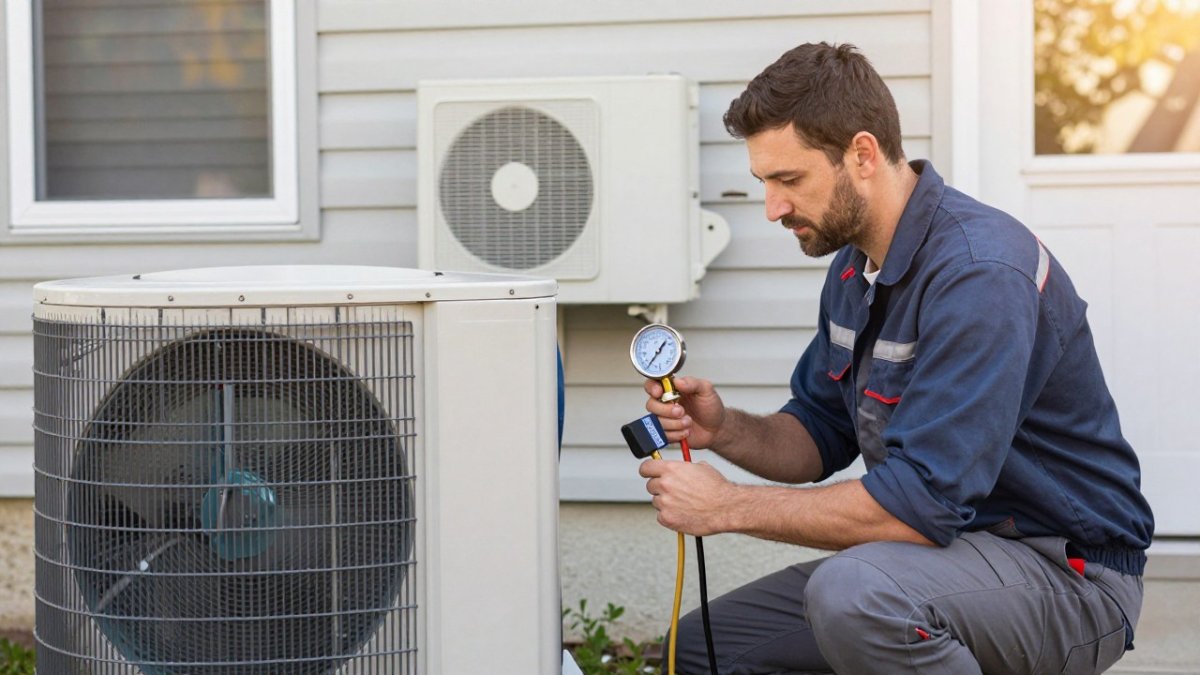
Air-source heat pumps are the most common choice for a forced-air home with existing ductwork. Ductless mini-splits skip the ducts entirely and serve individual rooms or zones. Geothermal systems use the stable ground temperature for the highest thermal efficiency, but they need loop field excavation and carry the largest upfront installation labor.
| Type | Best For | Main Trade-Off |
|---|---|---|
| Air-source | Homes with existing ducts | Duct losses cut efficiency |
| Mini-split (ductless) | Additions, zoning, older homes | One head per zone |
| Geothermal | Long-term efficiency focus | Highest install cost |
Cold-Climate Performance and Variable-Speed Compressors
Cold-climate performance is where cheap heat pumps fall apart. A single-speed compressor runs flat out or not at all, which means more cycling, more noise, and a sharper drop in capacity as outdoor temperatures fall. A variable-speed compressor using inverter technology modulates output in small steps, holding a steady indoor temperature and cutting energy consumption in mild weather.
If you live somewhere with real winters, ask for the unit's rated capacity at your design temperature, not just its headline BTU capacity. That single number tells you more than any marketing claim.
How to Lower High Electricity Bills With the Right Heat Pump Setup
The right setup lowers high electricity bills through three levers: a properly sized unit, sealed ductwork, and a smart thermostat that schedules by occupancy. Most homeowners focus on the first and ignore the other two.
We recommend starting with a load calculation and a duct inspection before you pick equipment. A right-sized system running steadily uses less energy than an oversized one that blasts and stops. For a step-by-step walkthrough of cutting usage after installation, see our guide on how to lower high electricity bills with the right setup.
Heat Pump Tax Credits 2026: What Homeowners Can Claim
Federal heat pump tax credits depend on program rules that change over time and on your filing situation, so confirm current eligibility and amounts with a tax professional and check the IRS guidance on energy-efficient home improvements before you budget around them.
Keep every invoice and the manufacturer's certification statement. A contractor who understands the paperwork makes claiming the credit far simpler.
The Average Cost of Heat Pump Installation and What Drives It
There is no single average cost of heat pump installation, because the number is driven by your house, not the box. Separating the equipment price from the installation labor and the ancillary work is where most budget surprises are found.
1. Equipment. The outdoor condenser and matched indoor air handler or coil. Capacity, SEER2/HSPF2 tier, and whether the compressor is single-stage, two-stage, or variable-speed move this number most.
2. Installation labor. Line set runs, brazing, evacuation, refrigerant charge, electrical connections, and startup commissioning. Long line sets, second-story placements, and tight mechanical closets add labor hours.
3. Ancillary and remediation work. This is the bucket homeowners underestimate:
- Ductwork sealing, repair, or replacement
- Electrical panel upgrade if the existing service cannot carry the new equipment
- Condensate management and drain routing
- Permit fees and inspection scheduling
- Removal and proper disposal of the old unit, including refrigerant recovery
4. Optional add-ons. Smart thermostat, zoning dampers, surge protection, and extended labor warranty.
When you compare bids, ask each contractor to itemize the four buckets above so you are comparing the same scope, a low bid that omits duct sealing or a panel upgrade is not actually lower.
Post-Installation ROI: What the Energy Bill Actually Shows
Purchase price is only half the math. The other half is what the system saves you each month, and that depends on your climate, your utility rate, and how well the installation was executed.
To estimate your own payback, pull twelve months of utility bills, note your kWh rate, and ask the contractor for the unit's rated capacity and efficiency at your design temperature. A system that hits its rated HSPF2 in the lab but is choked by leaky ducts will not deliver the savings you were quoted.
For a detailed breakdown of what replacement runs, read our HVAC system replacement cost estimator and its 2026 cost guide.
Sizing, Retrofitting, and Smart Home Integration
Sizing starts with a load calculation using BTU capacity requirements for your envelope, windows, and insulation, not a rule of thumb. The industry-standard method is a Manual J calculation, which accounts for square footage, ceiling height, window area and orientation, insulation levels, air infiltration, and local design temperatures. A contractor who sizes by square footage alone will usually oversize the system, and an oversized heat pump short-cycles, never reaches its rated SEER2, and wears out its compressor faster.
Ask to see the load calculation output before you sign. It should list the calculated heating and cooling load in BTUs and the recommended equipment capacity. If the proposed unit is significantly larger than the calculated load, ask why.
Retrofitting an Older Home
Most guides assume new construction. In an older home, the real constraints are rarely the equipment, they are the house:
- Ductwork compatibility. Original ducts may be undersized for the airflow a modern heat pump needs, or may be unsealed and leaking conditioned air into the attic or crawlspace. A duct leakage test tells you whether sealing or replacement is required.
- Return air capacity. Undersized returns starve the system and raise static pressure, which cuts airflow and efficiency.
- Electrical service. Older panels may not have the capacity for the new outdoor unit and backup heat strips. A panel upgrade is a real line item, not a surprise to discover on install day.
- Insulation and air sealing. A heat pump maintains temperature rather than blasting heat, so envelope improvements often pay back faster than a larger unit.
Budget for these as part of the project, not as afterthoughts. A retrofit that skips them will underperform a simpler system installed in a tight, well-ducted house.
Smart Home Integration
Smart thermostat compatibility is the other piece, and it is where many installations quietly lose efficiency. Check three things before you buy:
- Staging support. The thermostat must be able to command the heat pump's multi-stage or variable-speed operation, not just on/off.
- Auxiliary heat control. You want the ability to lock out or limit backup heat above a set outdoor temperature, or the system will lean on expensive resistance heat.
- Defrost and emergency heat modes. Confirm the thermostat handles the heat pump's defrost cycle correctly and exposes emergency heat only when needed.
A thermostat that cannot control auxiliary heat will erase much of the efficiency you paid for in cold weather. Ask the contractor to demonstrate the configuration at commissioning, and keep the settings documented.
Watch out: a contractor who proposes a unit without running a load calculation, or who cannot explain how the thermostat will stage the system, is the most common path to an oversized, inefficient retrofit.
Maintenance, Longevity, and Disposal of Your Old HVAC Unit
System longevity comes down to preventative maintenance: filter changes, coil cleaning, refrigerant charge checks, and a spring and fall tune-up. Skipping them shortens compressor life and quietly raises energy consumption.
Disposal is the step most guides skip. Your old unit contains refrigerant, which is federally regulated and cannot be vented (the EPA). A legitimate installer recovers it, recycles the metal, and disposes of the unit properly. Ask who handles that before the crew arrives.
Getting a Free Estimate Before You Commit
A free estimate should include a load calculation, a duct inspection, and a written scope. Our guide on what to expect during an HVAC inspection walks through the process so you know what a thorough assessment looks like, and our article on how to spot signs an HVAC technician is overcharging covers the tactics to watch for.
Watch out: a quote that skips the load calculation and simply matches your old unit's tonnage is the most common way homeowners end up with an oversized system that short-cycles and never delivers its rated SEER2.
Choosing a heat pump is a decision about your house, not a spec sheet, and the difference between a good system and a great one is the assessment behind it.
Frequently Asked Questions
What is the best heat pump system on the market in 2026?
There is no single best heat pump systems pick for every home. The right choice depends on your climate, ductwork, and budget. In colder regions, look for a cold-climate model with a variable-speed compressor and strong HSPF2 ratings. Homes without ducts are better served by a ductless mini-split. Before buying, ask for a load calculation so the BTU capacity matches your square footage, and compare SEER2 ratings across at least three quotes.
Are heat pumps worth the investment for energy savings?
Heat pumps move heat rather than generate it, so they typically use less energy than a furnace or baseboard setup for the same comfort level. The savings depend on your current system, insulation, and local electric rates. Pairing a high-efficiency unit with a smart thermostat, regular preventative maintenance, and correct sizing is how to lower high electricity bills over time. Ask your contractor for an annual operating cost estimate before you commit.
How do heat pump tax credits 2026 work for homeowners?
Federal incentives for qualifying heat pumps may be available, and state or utility rebates may also apply. Eligibility depends on the model's efficiency ratings, so confirm the unit meets the program thresholds before installation. Keep your itemized invoice and manufacturer certification statement for your tax filing. Rules and caps can change year to year, so verify current terms with a tax professional or the program's official guidance.
How do I choose the right size heat pump for my home?
Size is set by a load calculation, not square footage alone. A contractor should measure your home's insulation, window area, duct condition, and local climate before recommending BTU capacity. An oversized unit short-cycles, which hurts dehumidification and system longevity, while an undersized one runs constantly and drives up energy consumption. Ask to see the load calculation in writing, and treat any quote that skips it as a red flag.